
ABOUT THE PROJECT
Designing an AI-assisted coaching platform
EvolveWell set out to bring coaching work into one platform, with AI helping coaches plan and personalise it. Between sessions, assignments such as breathwork, meditation and daily reflection were meant to help clients build on that work and progress faster. I worked directly with the founders, including experienced coaches Alex and Rod, as the founding product designer for the coach web platform and client mobile app. My work covered research, prototyping and testing, UX and UI design, product strategy and visual identity.
What I worked on
Team
Myself, Co-founder, Head of product, CTO
TIMELINE
2024-2025

Problem & context
Client context was scattered across tools
The research brief showed that most coaching happened once or twice a week, while the days in between were largely disconnected from the process. The founders’ research found that coaches already assigned activities, but content and client history were scattered across notebooks, spreadsheets and saved links. Preparing another activity meant piecing that history together. After sending a link, coaches had little information about whether clients completed the activity. The opportunity was to give coaches a lightweight way to keep that momentum going between sessions.
AI could turn client history into next steps
When I joined, founders Alex, Rod and Pete had a Figma prototype: AI would help coaches make sense of client history, prepare sessions and suggest activities. An AI companion would help clients reflect between sessions.

The founders’ prototype, split equally between AI chat and coaching tools.
Research and requirements
I was new to coaching, but luckily, the founders weren’t
Alex and Rod were both founders and experienced coaches, so our stakeholder interviews also gave me a firsthand view of their coaching practice. I also reviewed notes and recordings from their interviews with other coaches in their networks. We agreed to focus first on the assignment flow: how coaches chose activities, how clients completed them and reflected, and how that feedback helped coaches plan the next session. We saw that loop as the foundation for the rest of the product. Notes, session management and scheduling could wait.

ChatGPT helped summarise stakeholder interviews, their research and later tests. I shortened and edited the summaries in Figma’s Research & evidence area for design decisions.
Coaches wanted AI to help without getting between them and their clients
I pulled together the coaches’ goals and concerns from those interviews. At first, what I knew about clients came from their coaches. Coaches wanted to: • Help clients make lasting progress beyond the sessions • Make AI a regular part of their coaching practice • Bring more meditation and breathwork into their work with clients • Give clients one place for materials, practices and reports instead of scattered emails AI was coming up in their professional circles. They saw how AI might help analyse client data and prepare sessions, but worried about clients’ reactions, privacy and data use. Notes and scheduling apps were familiar territory; some coaches had also used Kajabi or ChatGPT.

The coaching cycle, from a session to an assignment and back through the client’s reflections.
What we needed to learn from the first prototype
For the assignment flow, our hypothesis was that bringing session history, assignments and reflections together could help coaches plan what came next and support clients between sessions. That left us with three questions to explore: • How might we help coaches choose what fits a client without piecing their history together each time? • How might we make reflecting with AI feel useful to clients, while keeping them in control of what they share? • How might we help coaches turn what clients share between sessions into a meaningful next step? Before testing, we agreed on three success criteria: • Coaches could prepare an assignment suited to a client’s goals without gathering context again in other tools • Clients completed the activity without moderator help, understood they were talking to AI and who could see the conversation, and chose to leave a reflection • Coaches could identify a next step, such as a session topic or another assignment, and explain what informed it
Prototype, test, repeat
AI didn’t need half the screen
The founders’ prototype covered the coaching goals, but I had doubts about its interaction framework, so we tested that version before making changes. Client records and coaching tools took up half the screen. AI chat took up the other half. In tests, coaches spent most of their time in the CRM, turning to AI for assignments, notes or content. Half the screen was a lot to give up for occasional help. They also moved between the assignment editor and client overview to check history. AI had that context, but coaches needed to check it themselves.

A new interaction framework exploration
Coach workspace
Client work up front, AI close by
Client records became the main workspace, with AI available in a side panel. Quick views kept client context within reach. Coaches could open a full view when they needed more space.
Exploring client records through quick views and full views.
Creating an assignment with AI, from suggestion to coach review.
Some coaches wanted to start with a conversation
The CRM stayed the default, but some coaches preferred conversation. An optional AI workspace let them start tasks in chat and revisit conversations from across their work. The side assistant helped with whatever they had open in the CRM.
Switching from the CRM to the AI workspace to start a conversation
They knew the job, so we gave them a place to start
Writing prompts didn’t need to become part of a coach’s job. We organised the Prompt Library around familiar tasks, including client progress reports. AI could bring together session notes, assignments and reflections into a draft the coach could review and edit before sharing.
Creating a client progress report with AI in full view, starting from the Prompt Library
The client’s experience
People came to do breathwork, not figure out our interface
In client tests, separating instructions and video from the AI conversation left people unsure where to start. We also couldn’t tell whether they’d watched the video or skipped to reflection. Some exercises called for closed eyes. A running video wasn’t doing much for them there.


The first iteration, with assignment instructions, video and AI chat in separate views.




Back to the coach
“Completed” didn’t tell the coach how it went
An assignment could run daily until the next session, so the coach needed more than a completion status. I put an AI summary first to bring together patterns across the client’s practices and reflections, with the full conversations available below. Feedback from around 15 coaches and our team pointed to shorter summaries, links to the source conversations and help planning the next step. The summary shipped; connecting findings to client goals and suggesting another assignment or session topic remained planned.
Reviewing the AI summary of a client’s reflections after completing an assignment
Outcomes
Reflections became material for the next session
Coaches said reflections and journal entries gave them more to work with when preparing sessions. AI helped them make sense of that material. They also said they rarely needed to work outside EvolveWell, apart from taking handwritten notes during sessions. This feedback came through Alex’s meetings with coaches and the Zig Ziglar coaching association.
Clients felt more connected to their coach
Coaches also passed on feedback from their clients: they felt they were progressing faster, enjoyed talking with the AI companion, and felt more engaged with their coach. That was their feedback; we hadn’t measured time saved or changes in client progress.
Product direction
Coaching organisations became the focus
Over time, we shifted our focus from individual coaches to coaching organisations such as Zig Ziglar, Co-Active and the International Coaching Federation (ICF). Our contact with Co-Active introduced us to Desiree Perez. After a year in coaching, EvolveWell pivoted towards aviation as she joined as COO. She knew the industry, had contacts there and saw a bigger opportunity for EvolveWell.
What I learned
It looks different when the reflection is yours
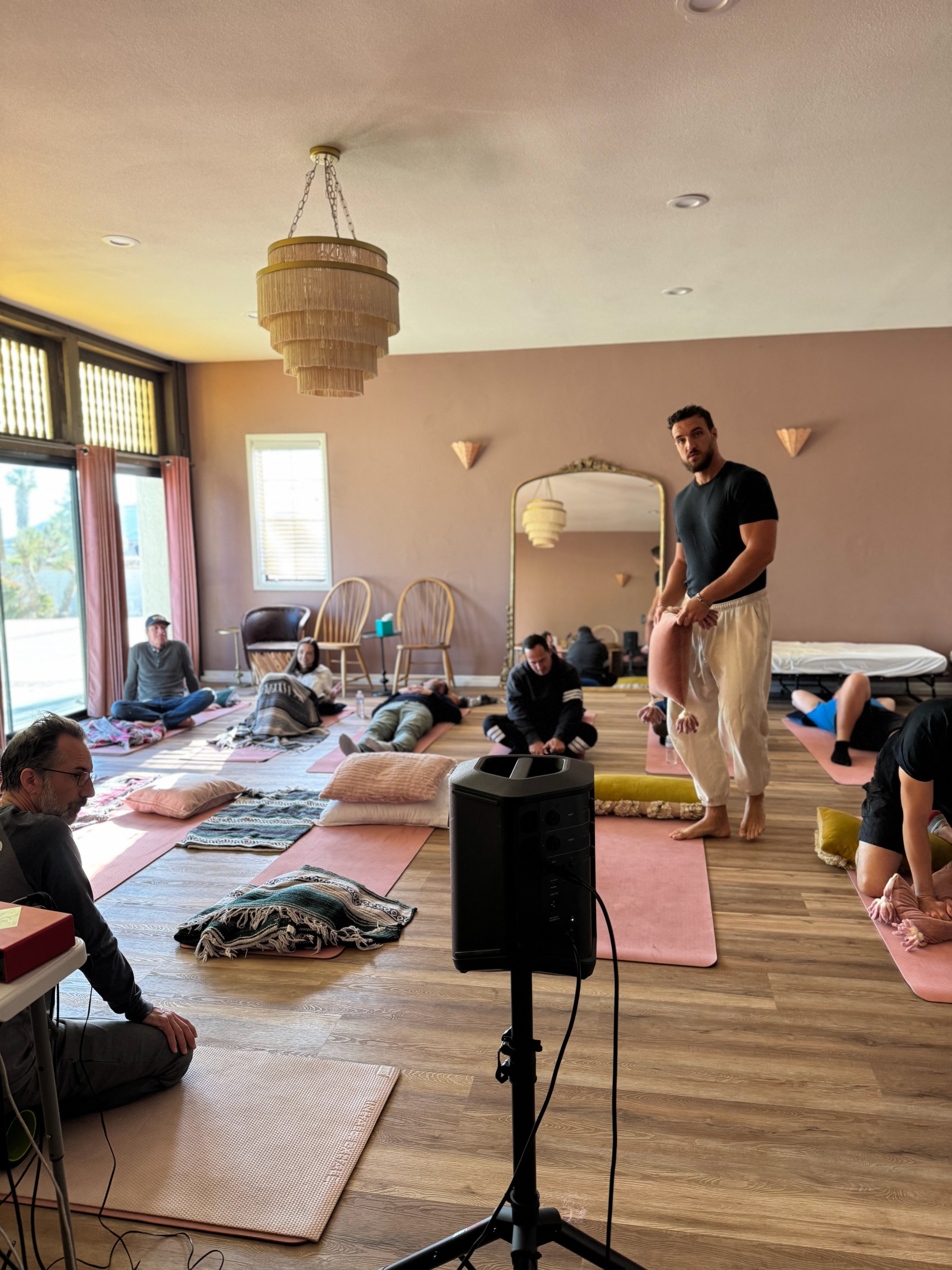
Doing breathwork and meditation with the team was one thing; deciding what to share afterwards was another. Taking part gave me a view of the product I wouldn’t have had from the coach’s side alone.
Start with the job people already know
Coaches knew what they wanted to get done. Asking them to invent the right AI prompt added another task. I learned to start AI interactions with familiar coaching work, then let the conversation continue from there.
Keep scrolling or click to explore the next project

DasCoin